From a single library to a scalable Digital Design System
Texas Department of Transportation
Project Overview
Timeline: 2 months
Team: UX Designer, UX Manager, Development Team
Tools: Figma, Adobe Experience Manager
TxDOT’s Digital Design System began as a single shared library intended to create consistency across the agency’s digital products. That approach worked when the system supported a limited number of products, but it became harder to maintain as the number and variety of websites and applications increased.
Different digital products share many of the same brand, accessibility, and usability requirements but they don’t always need the same components, patterns, or technical implementations.
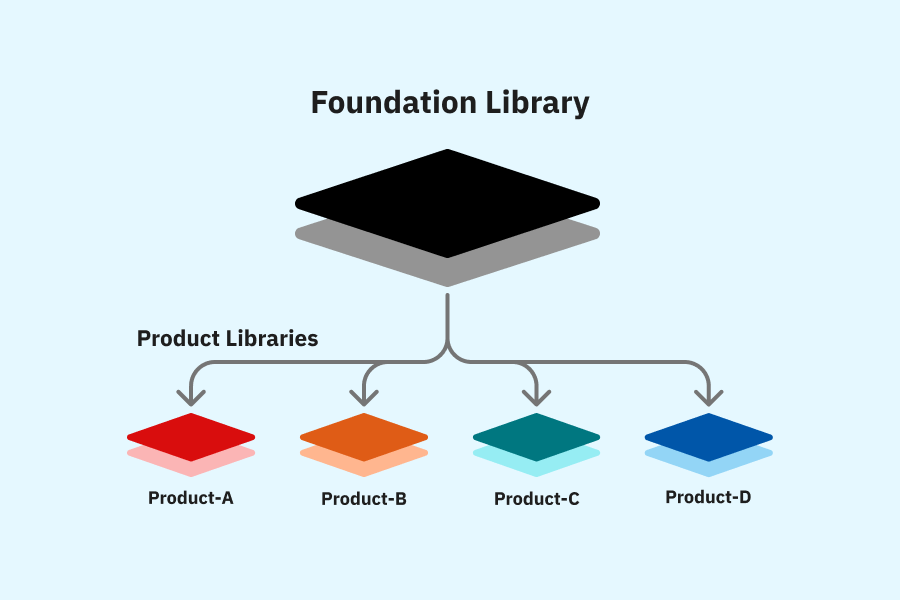
In 2026, the UX team restructured the system into a scalable, two-tier architecture:
A foundation library containing shared design tokens, standards, and core components that all TxDOT digital products must adopt.
Separate digital product libraries that inherit from the foundation while allowing teams to extend the system for legitimate product-specific needs.
This changed how we defined an enterprise design system. Instead of maintaining one library containing everything, we created one governed foundation that could support an expanding ecosystem of digital products.
The Challenge
The original design system was managed as a single Figma library used by multiple products. As the system expanded, that model created several challenges:
The library became increasingly large and difficult to maintain.
Components developed for one product were not relevant or appropriate for another.
Product-specific changes conflicts and confusion in other products.
Updates to shared assets could become more difficult to coordinate.
The system also needed a stronger connection to production. A well-organized Figma library provides limited value if its variables, components, and naming conventions do not reflect the code used to build the live product.
Differences between design and implementation created ambiguity during handoff and made it easier for the documented system and production interfaces to diverge.
The challenge was larger than reorganizing a Figma library. TxDOT needed an architecture that could:
Preserve foundational consistency across products.
Accommodate legitimate product differences.
Connect design decisions to production code.
Establish clear product-level ownership and update processes.
Provide a scale approach for design system adoption across the organization.
The goal
Our goal was to establish a common digital foundation without forcing every product into an identical interface.
The new approach needed to:
Set a minimum design standard for all TxDOT digital products.
Preserve consistency in color, typography, spacing, accessibility, surfaces, and common interactions.
Allow teams to address product-specific user and technical requirements.
Make future product libraries easier to create and maintain.
Improve alignment between Figma assets and production code.
Clarify how shared and product-specific assets should be governed.
The intent was not to eliminate variation. It was to make variation purposeful and systematic.
Important: All insights and outcomes shared are intended to demonstrate general UX process and impact. Specific internal system details have been generalized or omitted to ensure security and privacy compliance.
Results and impact
User-experience impact
The architecture provides consistent:
Branding and visual language.
Accessibility requirements.
Typography and color.
Interface behavior.
Common interaction patterns.
It also allows products to adapt to the needs of their specific users without separating from the broader TxDOT experience.
Operational impact
The work established:
A repeatable model for creating additional product libraries.
A clearer process for managing shared and product-specific assets.
A common vocabulary between designers and developers.
Better documentation of design and implementation decisions.
More consistent opportunities for review and collaboration.
Product owners now have a stronger starting point. Instead of creating component variations for every product, teams can begin with established foundations and focus on the requirements that genuinely differ.
The restructuring did not require new positions or dedicated program funding. Progress came from improved architecture, governance, documentation, and collaboration between existing teams.
My role
As Brand, Design, and User Experience Branch Manager, I provided strategic direction and governance for the transition.
My contributions included:
Identifying the scalability problem and establishing the initial project scope.
Leading the discussion to determine the boundary between shared requirements and appropriate product-level customization.
Defining the foundational and product-library model as the intended direction.
Reviewing the architecture, terminology, and supporting documentation.
Guiding how the model would be explained to product owners and support teams.
The implementation was collaborative. UX team members restructured and maintained the Figma libraries and documentation, while development team helped align design variables, naming conventions, and components with the production codebase.
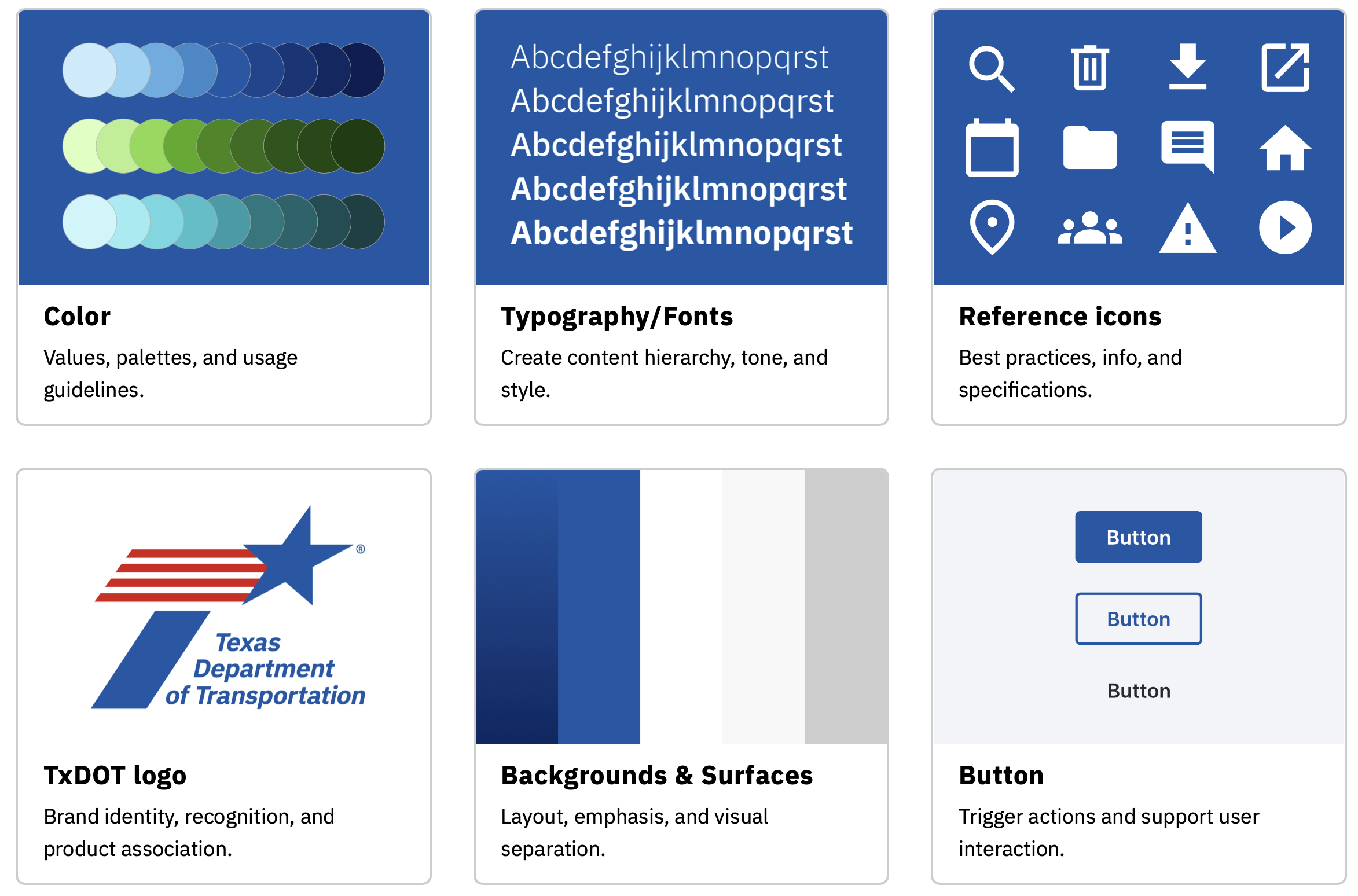
Screenshot of foundational library components.
The approach and important decisions
Separate shared foundations from product needs
The team divided the system into two connected levels.
The foundation library contains shared assets and requirements, including:
Primitive design tokens.
Color and typography standards.
Spacing and surface principles.
Common interface elements.
Baseline brand and accessibility requirements.
Each digital product library inherits from the foundation and may include:
Product-specific semantic tokens.
Specialized components and patterns.
Templates for recurring product needs.
Extensions required by the product’s users or technical environment.
This prevents fragmentation and forced uniformity that prevents products from effectively serving their users.
Use inheritance to support governed flexibility
Product libraries extend the foundation rather than replace it. Updates to shared assets can flow into connected product libraries through a managed review and update process.
This establishes the foundation as the common source of truth while giving product teams a controlled way to address requirements that are not universal.
Align design with production
UX and development team worked together to align the Figma system with the TxDOT.gov codebase. The work included:
Auditing existing CSS.
Mapping design and code variables.
Establishing shared naming conventions.
Simplifying color definitions.
Documenting spacing and component expectations.
Creating a process for adding future global variables.
This gave designers and developers a more consistent vocabulary and reduced the translation required during handoff.
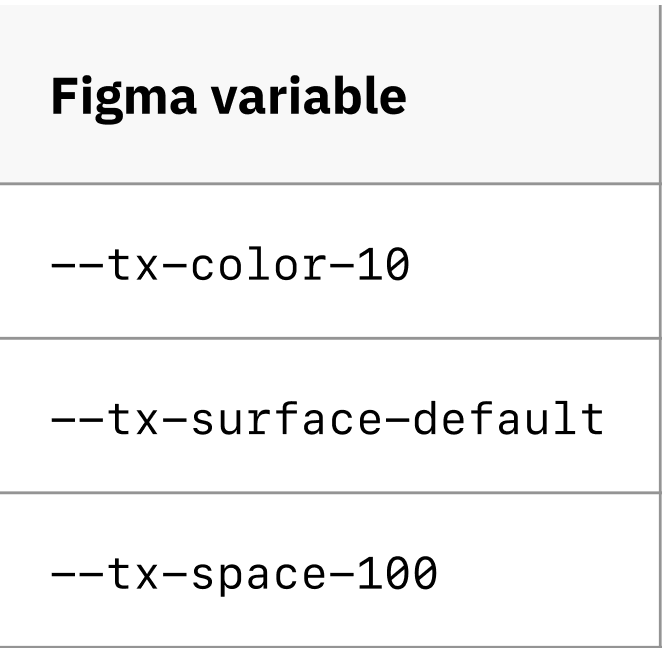
Screenshot of Figma tokens.
Strengthen collaboration
Architecture alone would not ensure future misalignment. The teams also introduced:
Earlier UX involvement in planning and development.
Recurring office hours for design-system questions and reviews.
Design and development discussions tied to implementation work.
UX rationale documented in development tickets.
Guidance for onboarding products, vendors, and new team members.
These practices helped move the design system from a static Figma resource toward a shared way of working.
The solution
The resulting Digital Design System is an extensible model rather than one universal component library.
The foundation establishes the common design language. Product libraries apply the system within within digital products. A public website, employee intranet, campaign site, and specialized application can share recognizable TxDOT standards without using an identical component inventory.
The system is supported by:
A documented two-tier architecture.
A shared foundation library.
Separate digital product libraries.
Primitive and semantic token layers.
Product-library update guidance.
Design-to-code alignment practices.
Recurring UX and development collaboration.
Lessons learned
The work reinforced several important lessons:
Enterprise consistency does not require complete uniformity.
Product-level flexibility needs clear boundaries.
A design system creates value only when it reaches production.
Architecture makes scale possible, but governance sustains it.
Collaboration is part of the system, not a separate activity.
TxDOT’s Digital Design System evolved from a shared library into governed infrastructure for a growing ecosystem of digital products. The foundation creates consistency, product libraries provide controlled flexibility, and ongoing collaboration helps ensure that what is designed is also what users experience.